How to Read a Fence Bid in Dallas
Compare the line items, not the total. Two fence bids for the same yard can land far apart because they are not pricing the same fence. Line them up on post depth, cedar grade, kickboard, trim, haul-off, the permit, the warranty and the payment schedule, and the gap usually explains itself.
- Itemized quotes
- Paid in three equal parts
- 5-year craftsmanship warranty on our work
Request a Quote
Two-minute form. Step 1 is all we need to get you a price.
Compare the line items, not the total
Most people pricing a fence want one thing: a number in mind before they negotiate, so they do not get taken. A total cannot give you that on its own. A lower bid with shallower posts, an unnamed cedar grade and no kickboard is not a better price for the same fence. It is a different fence.
Ask every bidder to itemize, then read the quotes side by side, one line at a time. When the lines match, the totals usually land close. When they do not, the table below shows where the money went. Every quote we write is itemized, so you can do this with ours too.
The line items, in order
These are the lines that decide most of the gap between two fence bids. If a quote leaves one out, that is the first question to ask.
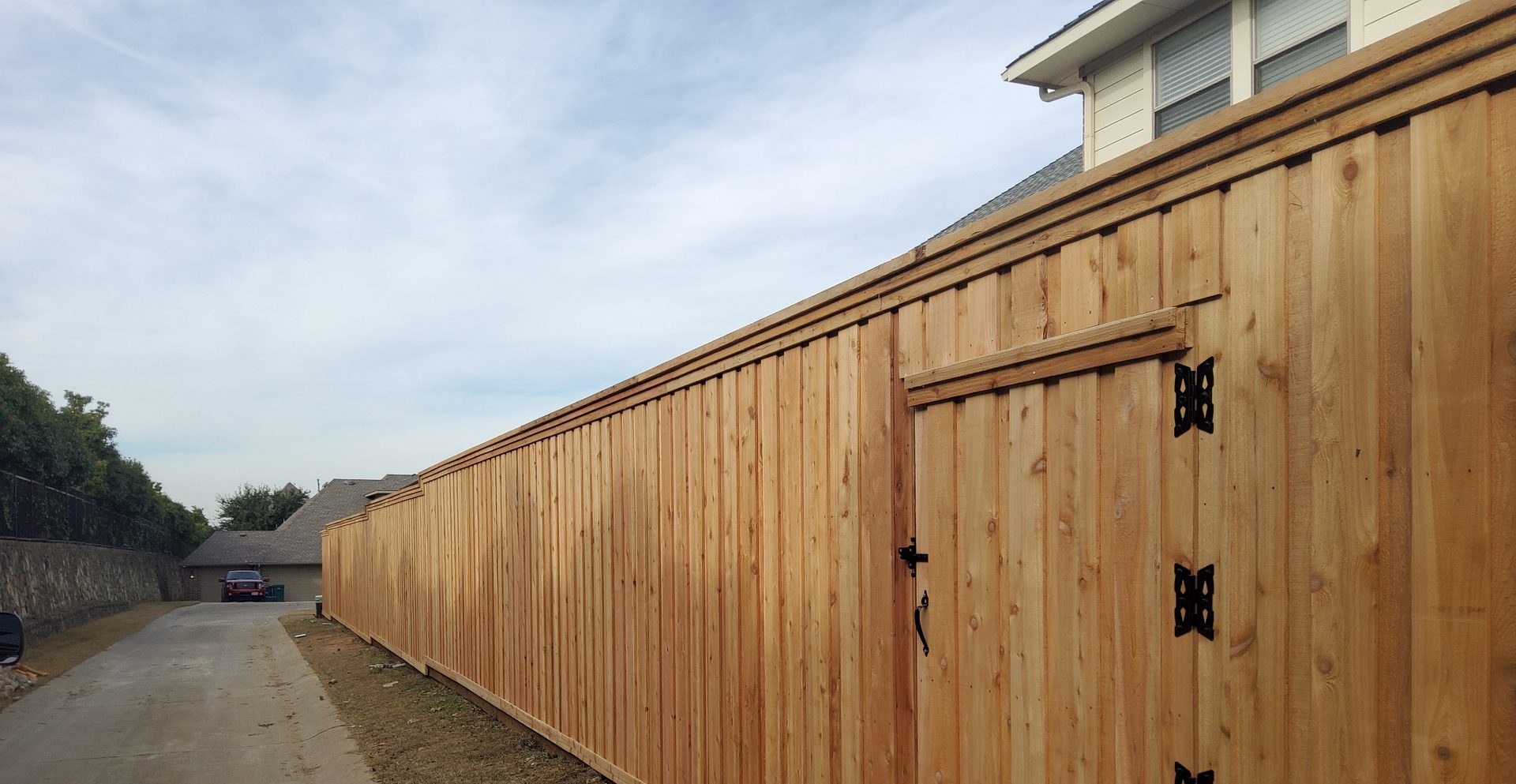
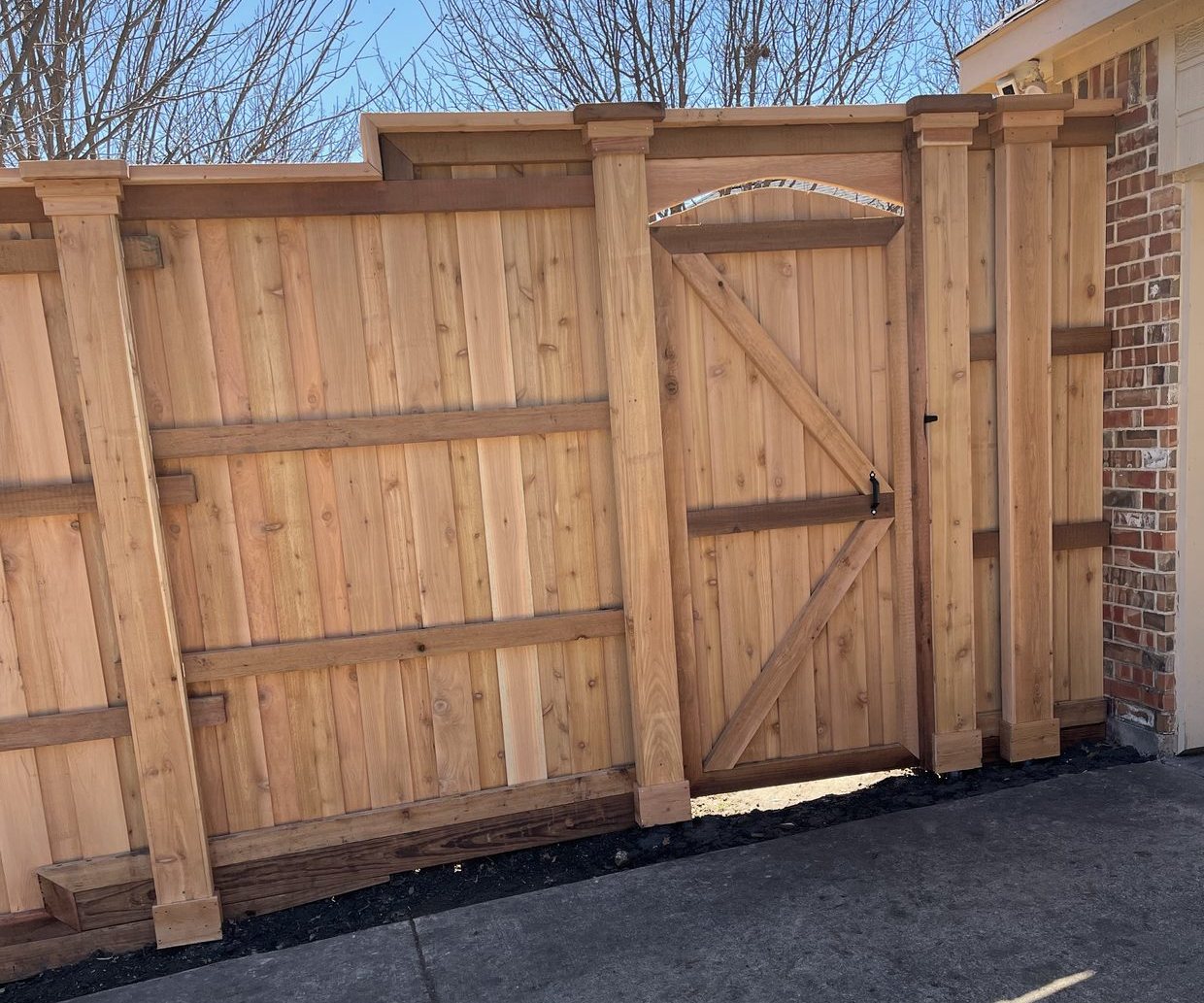
Three of them are easy to see in the photo: the cap along the top, the boxed posts, and the kickboard along the base. The rest live in the paperwork, which is why they belong on the quote.
| Line item | What the bid should say | What to ask if it does not |
|---|---|---|
| Post depth and post material | How deep each post is set, how wide the hole is and what fills it. Whether the posts are steel or wood, and what size. | How deep, how wide, and what post? Is the gate post the same as the rest? |
| Cedar species and grade | Which cedar and which grade, written on the quote, not just the word cedar. | Which species and which grade are you pricing? |
| Kickboard (rot board) | Whether a board runs along the bottom of the fence, and what it is made of. | Is there a kickboard, and what is it made of? |
| Cap and trim | Whether the top carries a cap and trim boards, or the boards end bare. | Is the cap and trim in this price? |
| Boxed posts | Whether steel posts are wrapped in cedar on the side that shows. Here is what boxing in the posts means. | Which side gets boxed, and is it priced on its own line? |
| Tear-down and haul-off | Whether taking out and hauling off the old fence is included, priced on its own line, or not part of the job. | Who takes the old fence away, and is that in this number? |
| Permit | Who pulls the permit where your city requires one, and whether the fee is in the price. | Does my city need a permit for this fence, and who is getting it? |
| Warranty | How many years, what is covered and what is excluded, in writing. | What would not be covered? |
| Payment schedule | How much is due when, and what each payment is tied to. | What is due before any work starts? |
Why same-spec quotes can still differ
Sometimes the lines really do match. One Dallas homeowner described three quotes where the highest bidder was proud of a fence built to exactly the same specs as the other two. When that happens, the difference is not in the lumber, and it is fair to ask what the higher number buys.
The answer should be something you can point to on paper: a longer warranty, a payment schedule tied to the work, a written start window, or a clear answer on who does the work. If nobody can name it, the lower bid may simply be the same fence for less.
More often, the lines were never the same. One bid names the cedar grade and the other just says cedar. One sets the posts deeper. One includes hauling off the old fence and the other never mentions it. That is why the line items come first.
Post depth is where the price hides
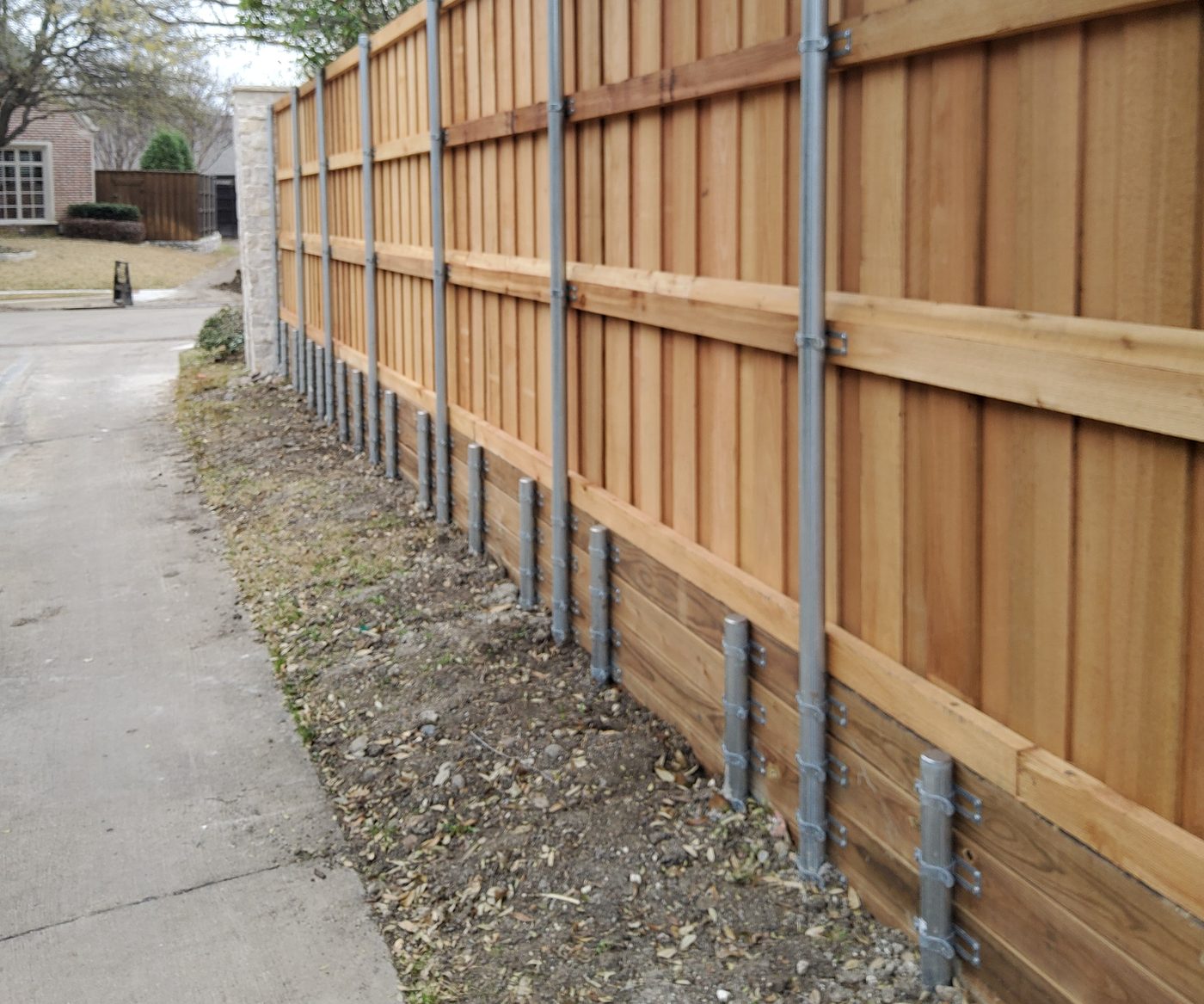
Once the boards go up, the posts disappear. That makes them the easiest place to save money on a bid and the hardest place to check later. A shallow hole and a deep one look the same on the day the crew leaves.
Buyers notice. On a Dallas homeowners' forum, one buyer had two bids that matched on everything except post depth, and that one line was the whole difference in price.
Much of the ground around here is clay that swells when it rains and pulls back when it dries, and at least one city writes post depth into its code: Carrollton sets a minimum footing depth by fence height. The section numbers are on our service areas page.
So ask every bidder for the same answers in writing: how deep each hole goes, how wide it is and what fills it, and what post goes in it. Ask us the same questions at your estimate. The rest of how we build is on our fence installation page.
What a fair payment schedule looks like
A fair schedule ties each payment to something you can see happen. Ours is paid in three equal parts: one third when you book, one third when work starts, and the last third when the job is complete.
Whatever schedule a bidder uses, it belongs on the quote, with a clear point for every payment. Be careful with a bid that wants most of the money before anyone digs a hole.
What the warranty covers and what it does not
Ours is a five-year craftsmanship warranty that covers a post that leans or shifts, a gate that sags, and a component that comes loose, but not a post moved by the ground shifting underneath it.
Gate opener motors carry the manufacturer's warranty. On any bid, ask for the term, what is covered and what is excluded, in writing. The exclusions tell you more than the number of years.
Want an itemized quote you can compare line by line?
Tell us what you are planning. We will walk the line and write every item out, so you can hold our quote next to anyone else's. We are based in Plano.
Rather write it all down first? Use the contact page.