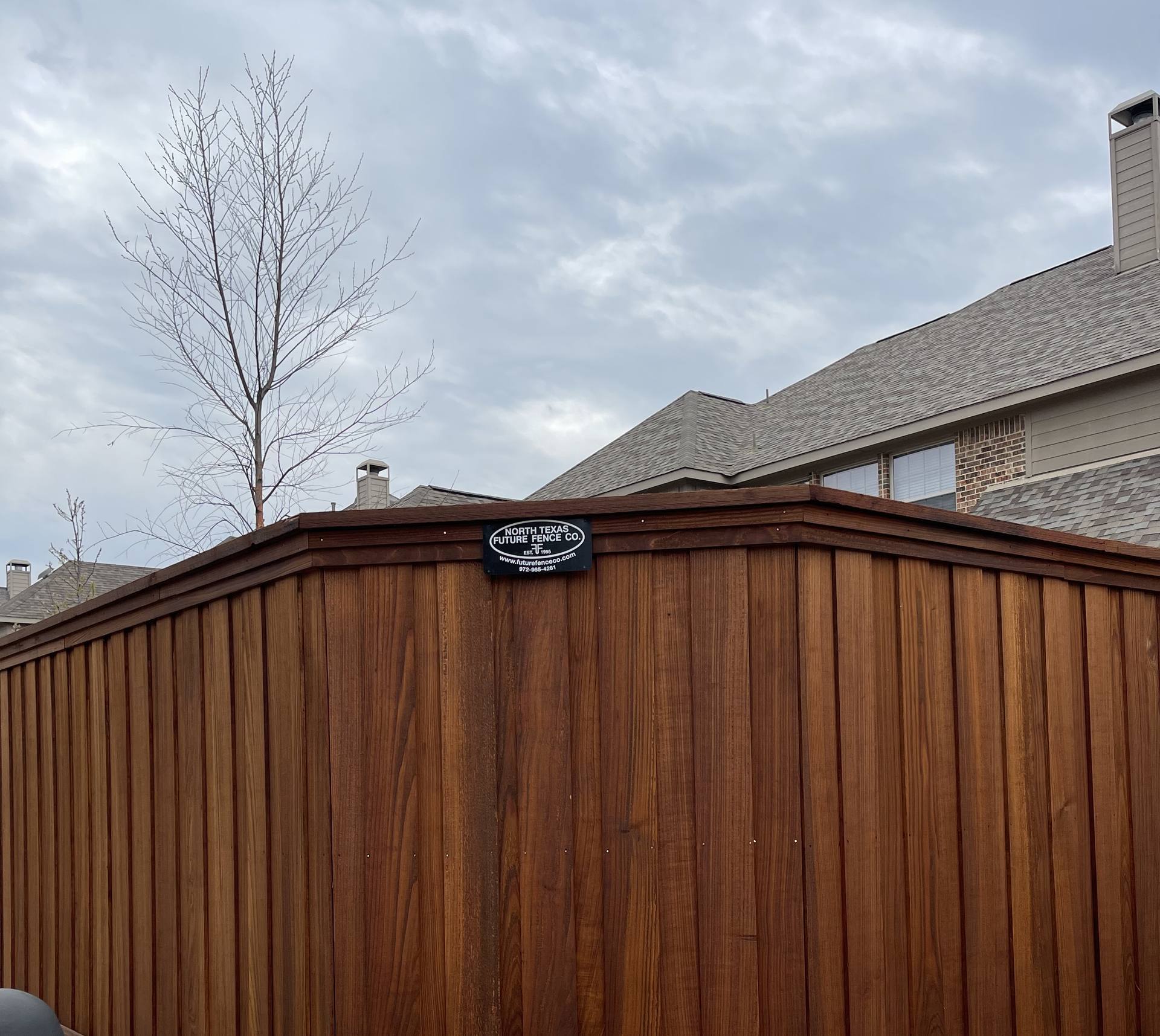
Fence Staining in Dallas & Plano
We re-stain cedar about every three years, on a schedule our office tracks. We stain in Dallas, Plano, Frisco, McKinney and Allen. Send a photo and the address and we quote it itemized.
- Pigmented stain, not a clear coat
- A cycle we track, about every 3 years
- Itemized quotes, no games
Request a Quote
Two-minute form. Step 1 is all we need to get you a price.
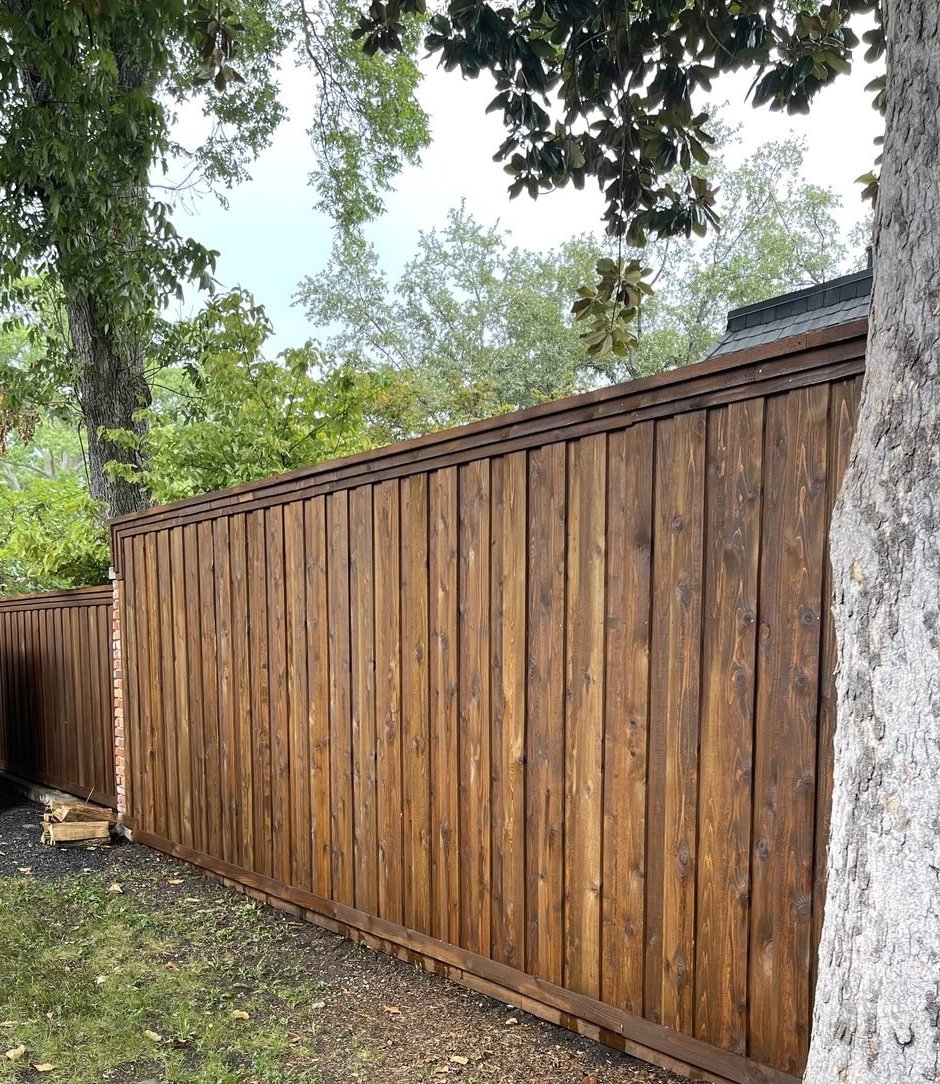
Staining on a schedule we track
Join the recurring schedule and we reach out when your fence is due, about every three years. We track the cycle so the protection never lapses. If we look at your fence and it is not ready yet, we will say so and come back next year.
Most homeowners mean to stay on top of it and then life happens, the fence grays, and the color is gone before anybody gets around to it. That is why our staining customers join the schedule.
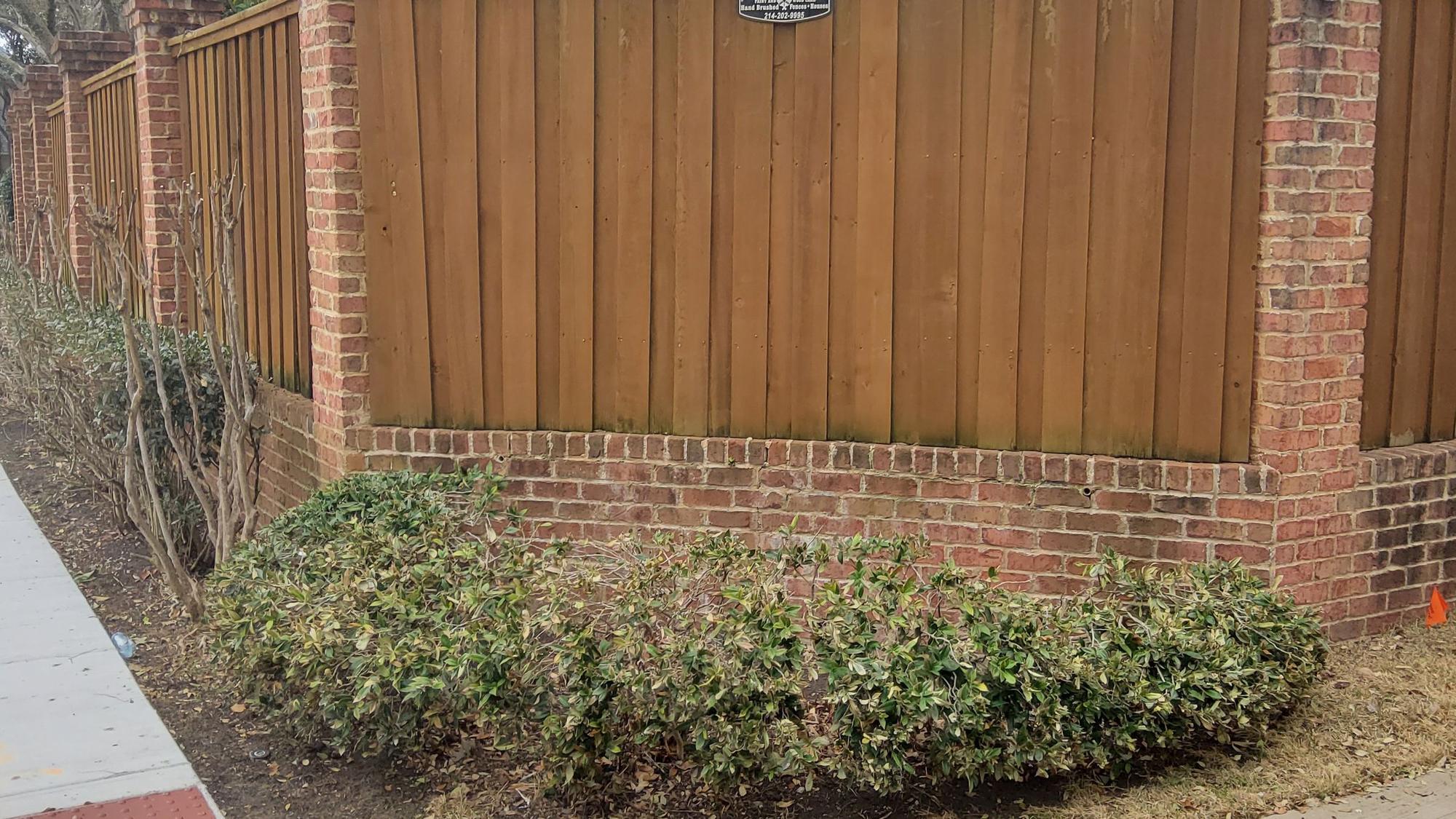
What staining does for a cedar fence
Pigmented stain gives cedar its color and shades the wood from the sun. It is a finish, not a repair: it works on a sound fence and does nothing for a leaning post.
What Stain Actually Does
We use a pigmented stain, not a clear finish. The pigment is the part that stands between the sunlight and the wood, and it is the reason a stained fence holds its color while the boards next to it go silver.
A Cycle We Track
Join the recurring schedule and we reach out when your fence is due, about every three years. You do not have to remember, and the fence does not have to go gray first to remind you.
Cheaper Than Starting Over
If the posts and boards are sound, staining is a fraction of what it costs to tear a fence line out and build it again. That is the whole case for keeping up with it.
Is it worth staining, or just let it go gray?
Letting it go gray is a real choice and we are not going to talk you out of it. A gray fence with sound posts and sound boards is still a fence. What staining buys you is color and a pigmented layer facing the sun. What it does not buy you is a repair.
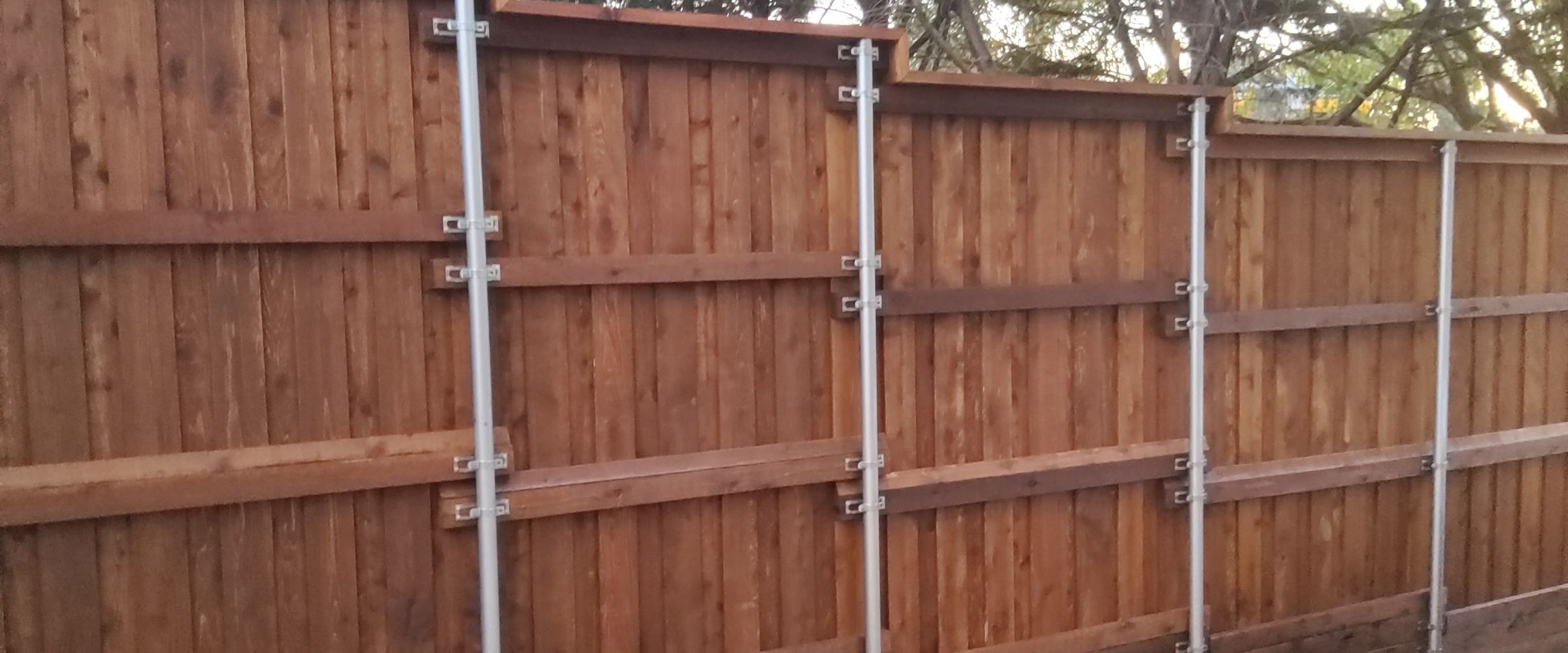
If you like weathered cedar
Skip it. Silver-gray is the look a lot of people are after, and we would rather tell you that than sell you a stain job you did not want. Call us when the fence itself needs attention.
If you want the color to stay
Then it is a schedule, not a one-time job. Color is the thing that goes first and the thing stain holds. Ours runs about every three years and we track it for you.
Either way, watch the bottom
Fences fail at the posts and the bottom boards, not at the color. Staining over a leaning post makes a leaning fence a nicer color. If that is what we find, we will tell you plainly. When the fence is past staining, we build the replacement: see our cedar privacy fences.
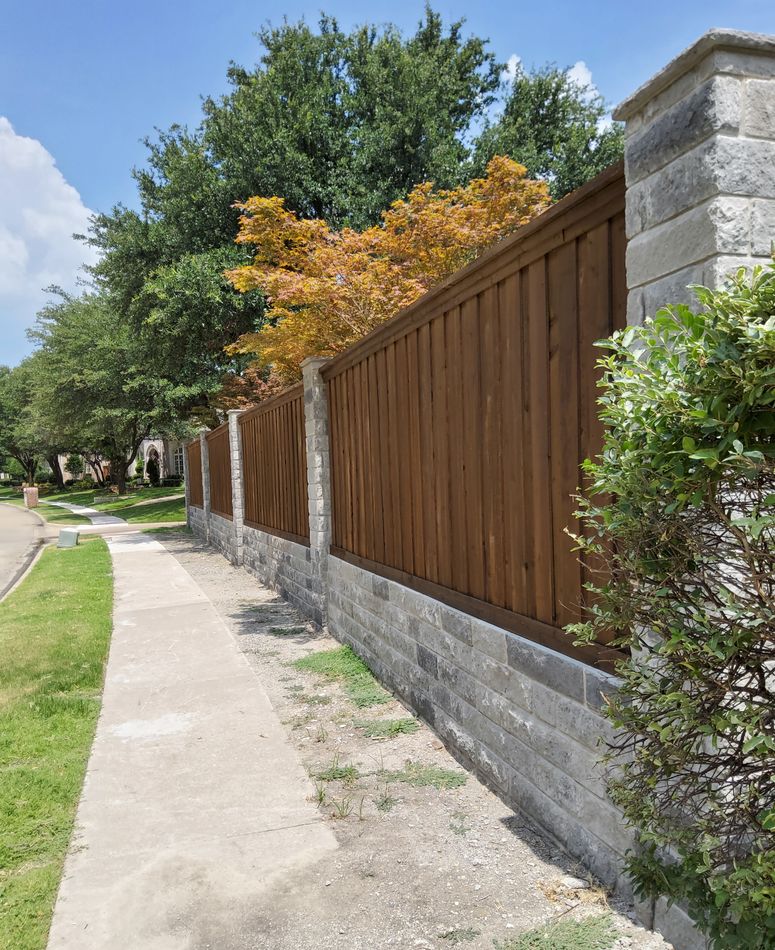
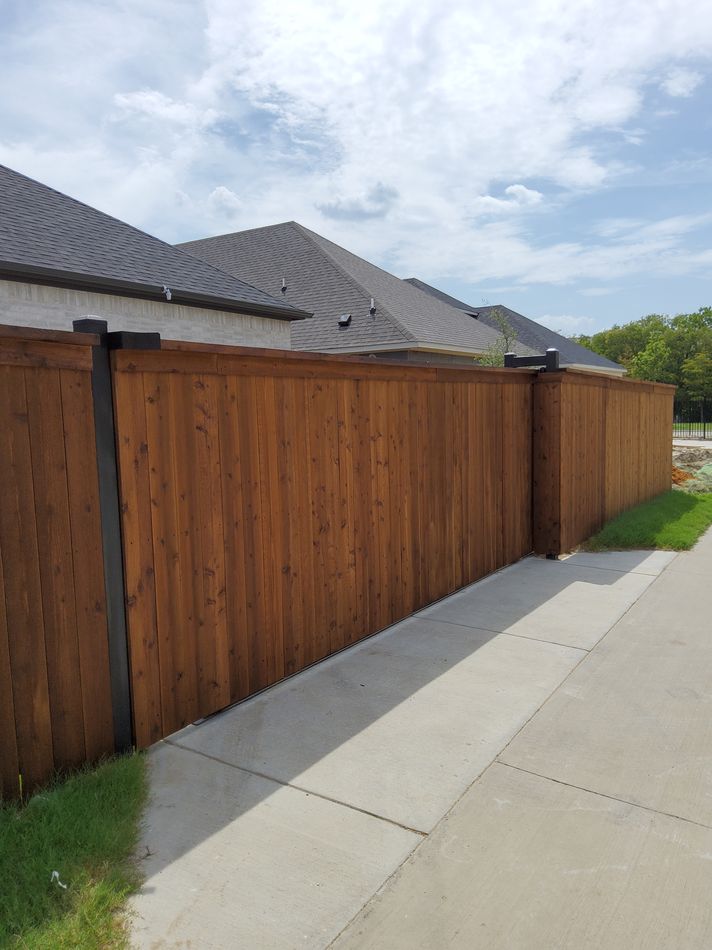
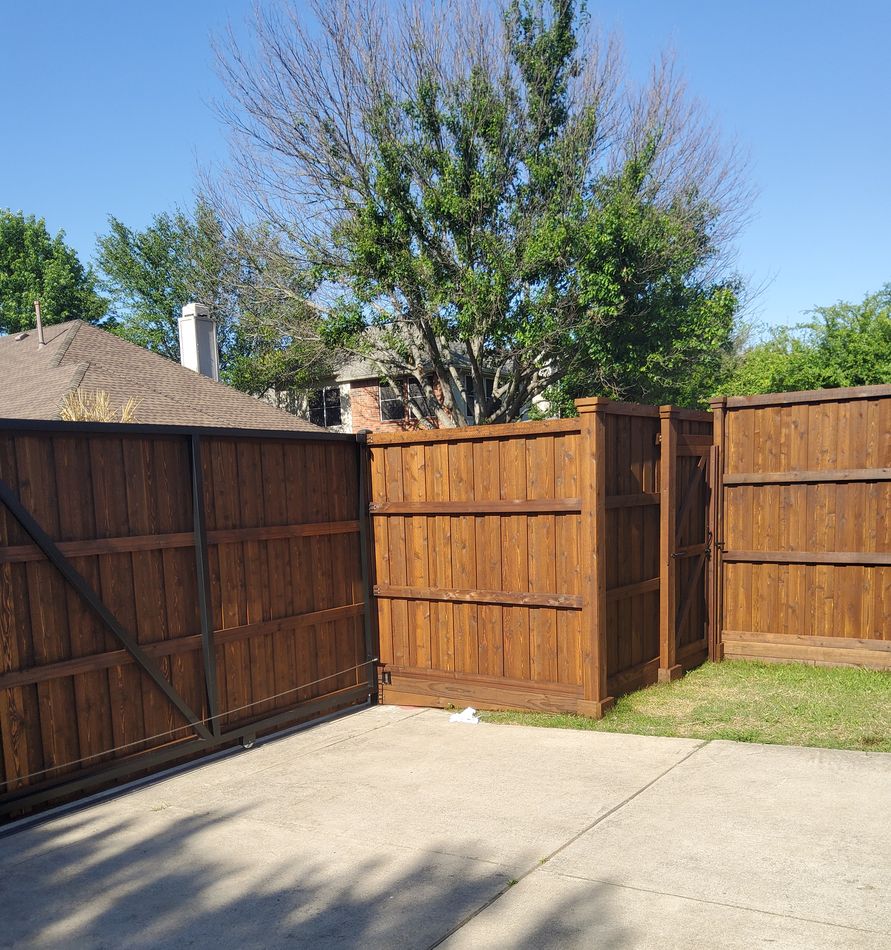
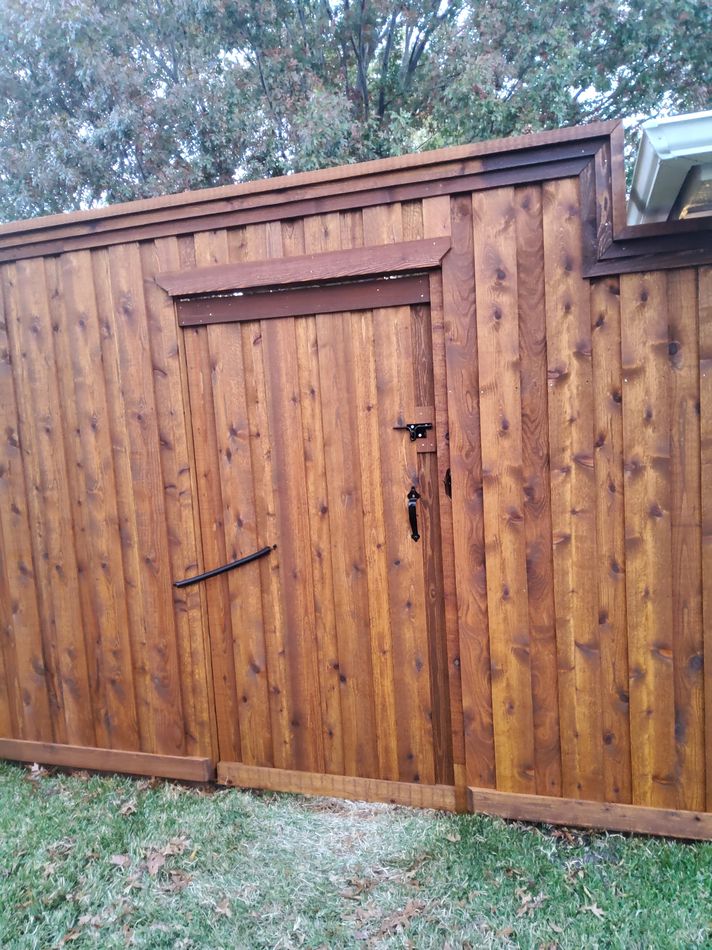
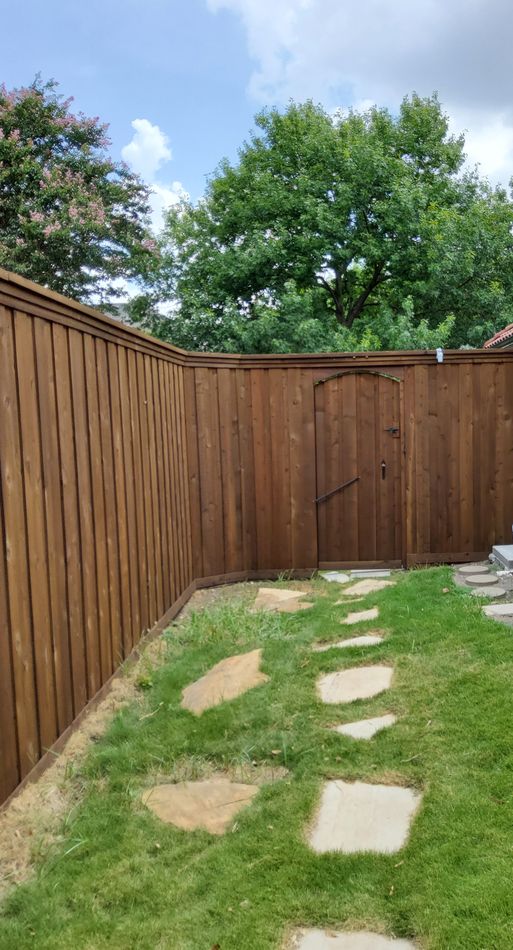
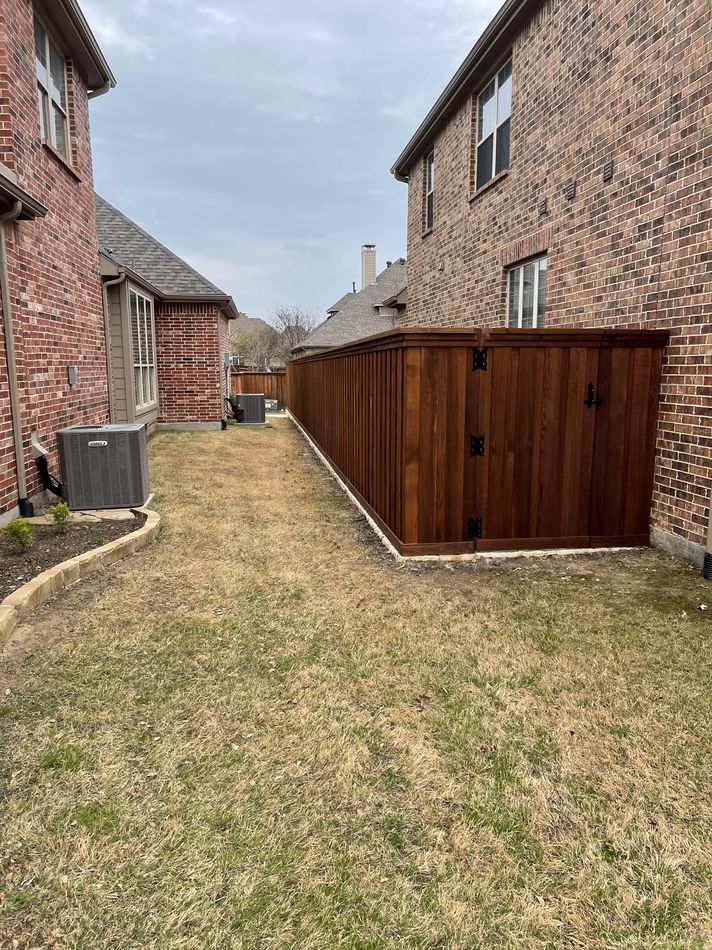
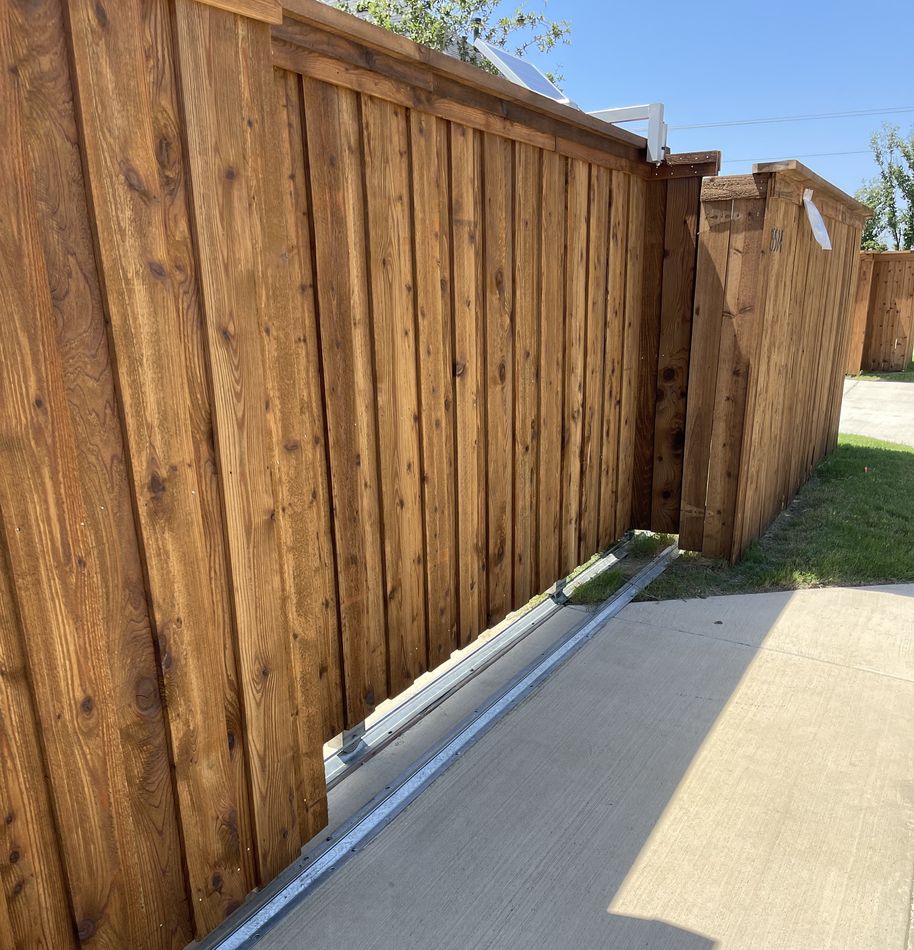
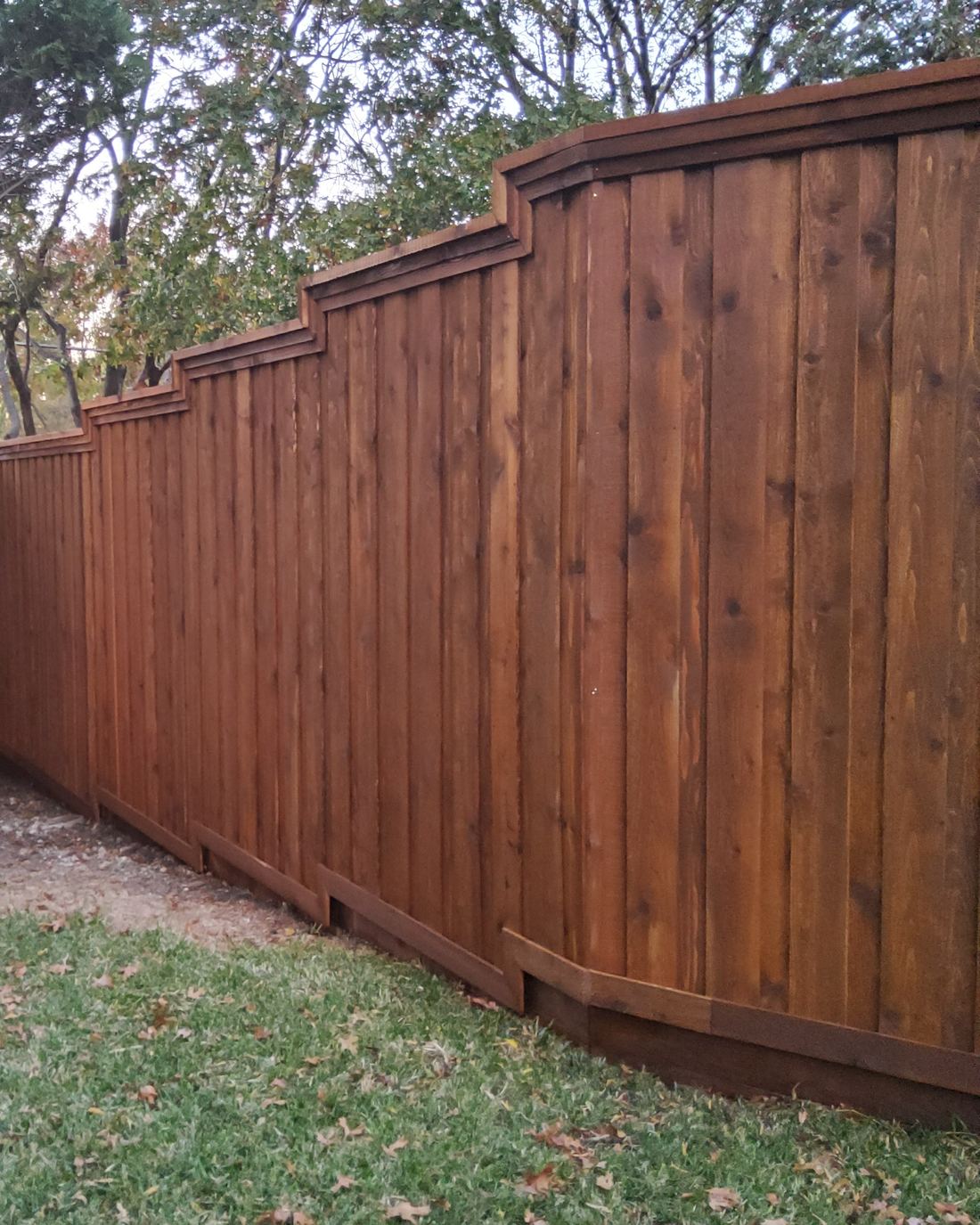
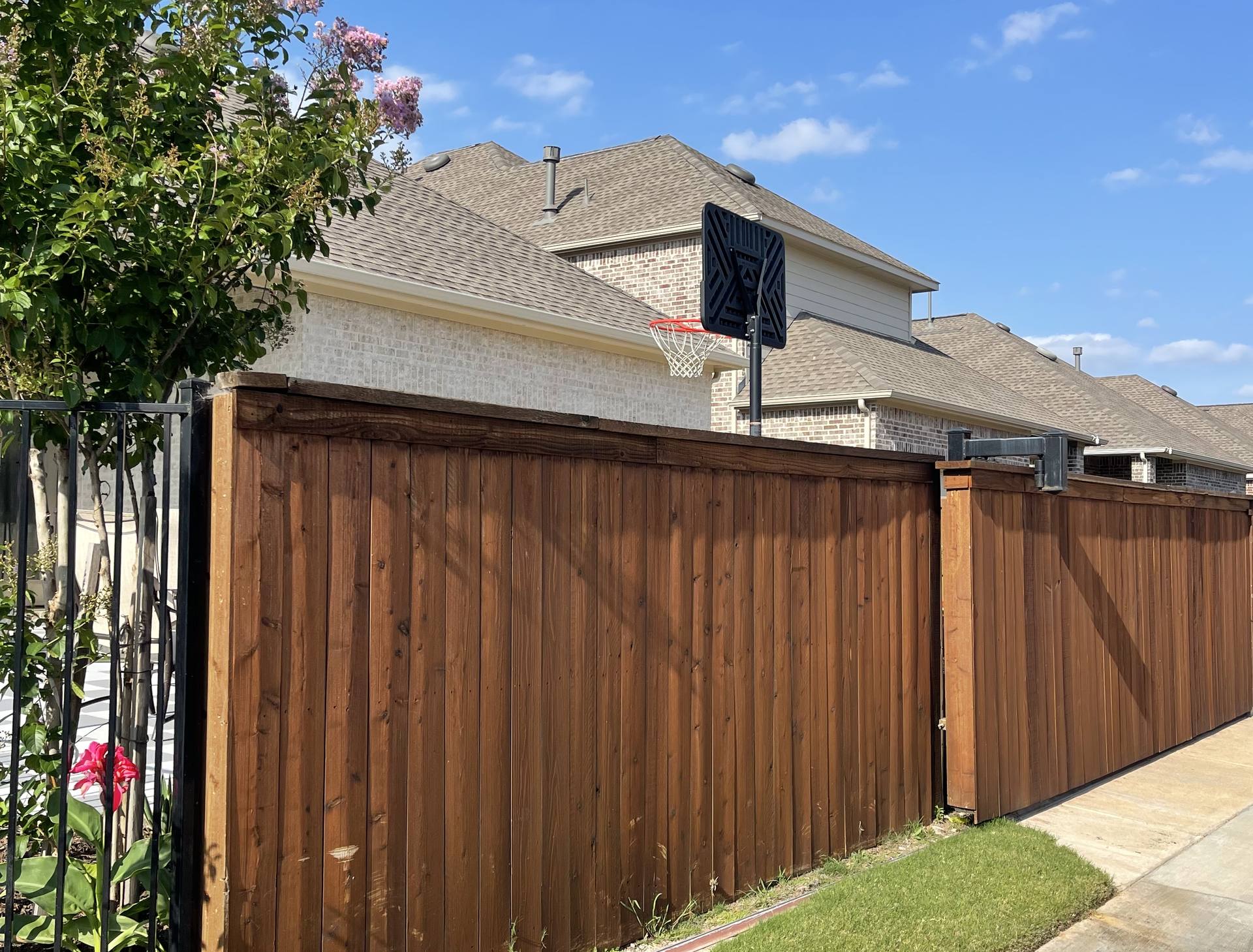
Stained cedar fences, before and after
Staining is hard to describe and easy to show. The color in these photos is what a pigmented stain does on cedar, and the gray you will see in some of the frames is the same wood without it.
Most of these are cedar runs we built and later stained on a recurring schedule, so the same fence shows up more than once at different points in its life. Where a frame shows two tones meeting, that is the line between stained and unstained wood on a single run.
Fence staining questions, answered
Quick answers before you request a quote.
How often should a cedar fence be stained in Texas?
What happens if you don't stain a fence?
Stain vs seal: what is the difference?
How much does fence staining cost?
Get your fence staining quote
Send us a photo and the address. We will quote it straight.